Publishing What Sedation You Actually Offer
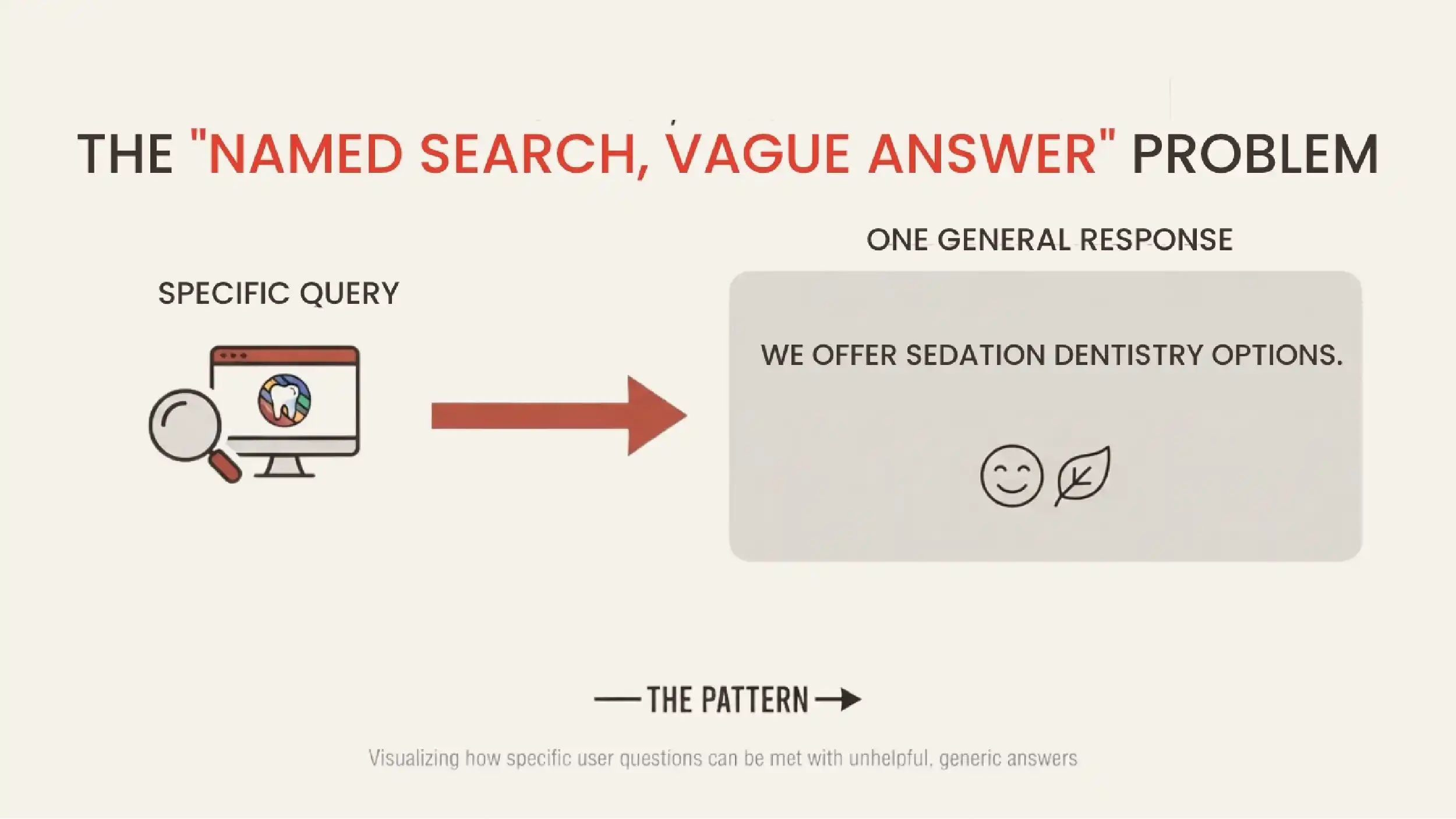
Sedation is one of the few dental terms patients search by name, and most practice pages answer it with a single line saying sedation is available. Assistants asked what to ask a dentist raise it directly, usually paired with pain management and anxiety, which means the reader arrives wanting to know which kind, what it involves and whether they qualify.
The options are not interchangeable
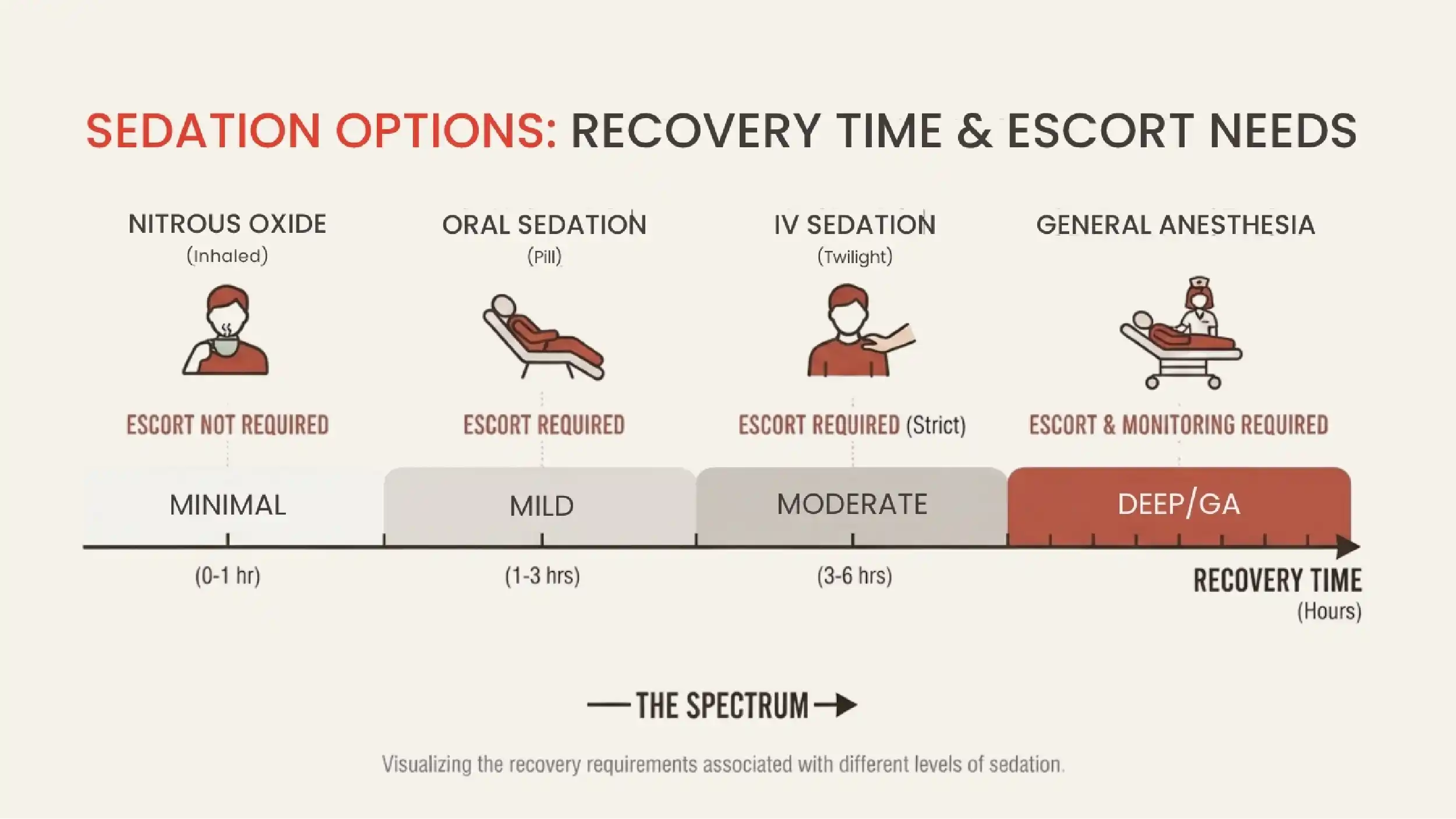
Nitrous oxide is inhaled, wears off within minutes and lets a patient drive home. Oral sedation is a tablet taken beforehand, leaves the patient drowsy for hours and requires someone to accompany them. Intravenous sedation is deeper again and is administered by a clinician with specific training. General anaesthesia is a hospital or specialist setting rather than a routine practice.
Those four differ in cost, recovery, who can administer them and what the patient has to arrange. A page saying sedation is available has answered none of it, and the patient still has to phone, which is what the sentence was written to prevent.
What to publish for each
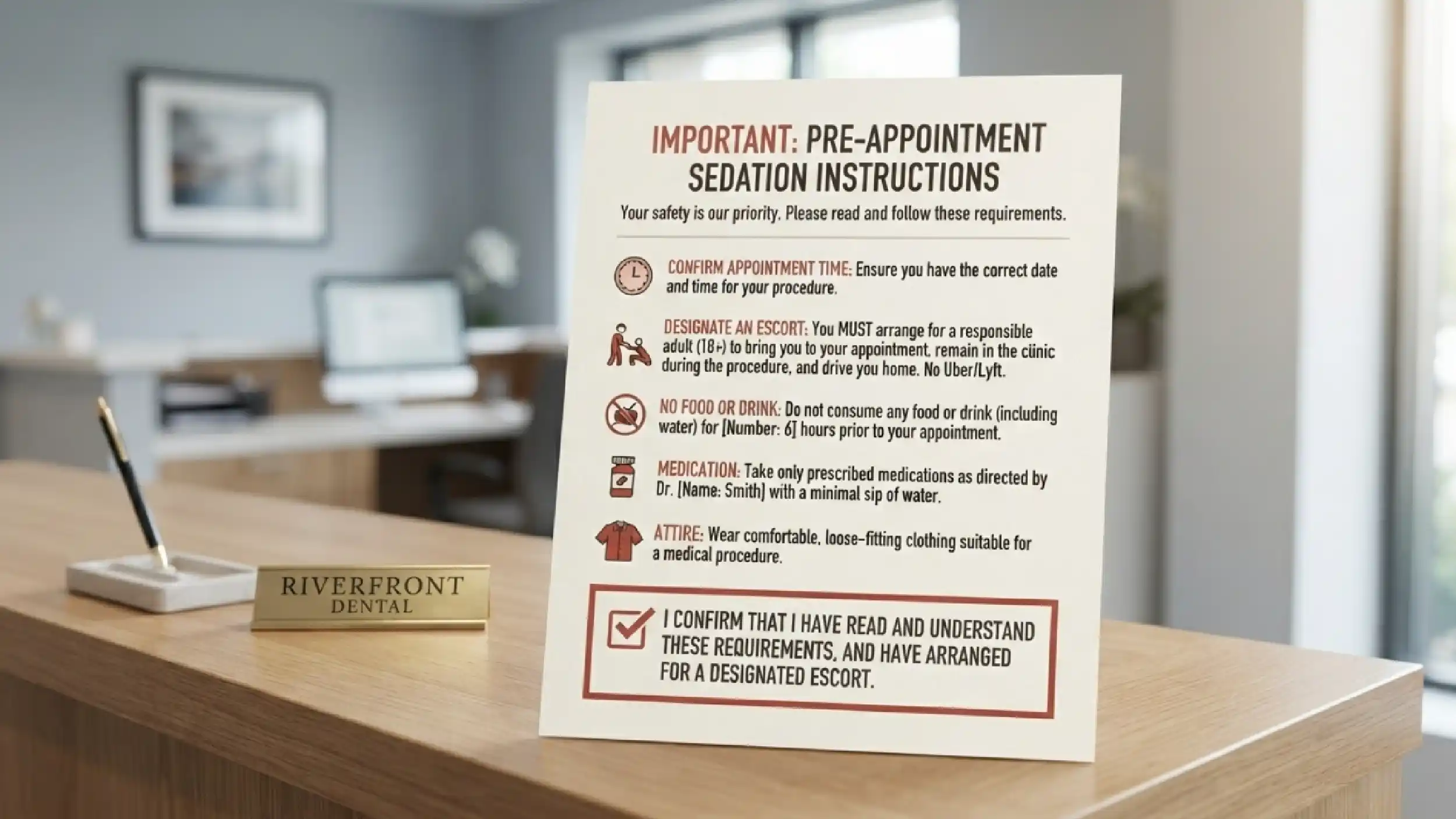
Which options the practice offers, what each involves, roughly what each costs, and what the patient must arrange. The escort requirement is the one most often omitted and the one most likely to derail an appointment, because a patient who arrives alone for oral sedation cannot be treated.
Say who administers it. A practice where a named clinician holds the relevant training has something specific to state, and where a visiting anaesthetist attends, the days matter as much as the fact.
Who is not a candidate
Sedation is not available to everyone. Medical history, current medication, pregnancy and airway considerations all rule people out or change the option, and a page implying universal availability sets up a refusal at the chair.
Saying that suitability is assessed beforehand, and that some patients will be advised against it, is more honest and reduces the wasted appointment. It also signals clinical judgement, which is the thing a nervous patient is actually trying to detect.
Cost and insurance
Sedation is frequently not covered, or covered only for defined clinical indications, and patients assume it travels with the treatment. Stating that it is usually a separate charge, and where insurance sometimes contributes, prevents the surprise that arrives with the bill.
Where the practice includes nitrous in the treatment fee rather than charging separately, say so. It is a small commercial decision that reads as generosity precisely because most practices itemise it.
SEO Is My Love Language was founded by Jose Villalobos, who has spent his career on a single discipline: getting businesses found, cited, and recommended by AI search. He has been a member of Koray Tuğberk Gübür’s Holistic SEO Community since 2022, is a graduate of the Topical Authority Course, holds the Google AI Professional Certificate, and is a member of Kyle Roof’s IMG. That combination, topical authority strategy paired with rigorous on-page execution, is what our team brings to every practice we work with.
Sedation is searched by name by people who have already decided they cannot face it otherwise, and it is one page inside the search and booking work around this page. The reader arriving here is usually the reader who has been putting this off for years, and sometimes one of the patients other practices turn away.
Frequently asked questions
What sedation options do dental practices offer?
Commonly four, and they are not interchangeable. Nitrous oxide is inhaled, wears off in minutes and allows driving. Oral sedation is a tablet taken beforehand, leaves the patient drowsy for hours and requires an escort. Intravenous sedation is deeper and needs specific training. General anaesthesia is a hospital or specialist setting.
What should a practice publish about each option?
Which it offers, what each involves, roughly what each costs, and what the patient must arrange. The escort requirement is most often omitted and most likely to derail an appointment, because a patient arriving alone for oral sedation cannot be treated.
Is sedation available to every patient?
No. Medical history, current medication, pregnancy and airway considerations rule people out or change the option. Saying suitability is assessed beforehand, and that some patients will be advised against it, prevents a refusal at the chair and signals clinical judgement.
Is sedation covered by insurance?
Frequently not, or only for defined clinical indications, and patients assume it travels with the treatment. Stating that it is usually a separate charge, and where insurance sometimes contributes, prevents the surprise that arrives with the bill.
Who administers dental sedation?
It depends on the option, and naming the clinician with the relevant training is worth doing. Where a visiting anaesthetist attends the practice, the days they attend matter as much as the fact that they do.
See where your practice stands in AI answers
See where your practice stands in AI answers today and what it would take to own the answer. Book a strategy call and we will show you.