What Specialist Actually Means and When You Can Say It
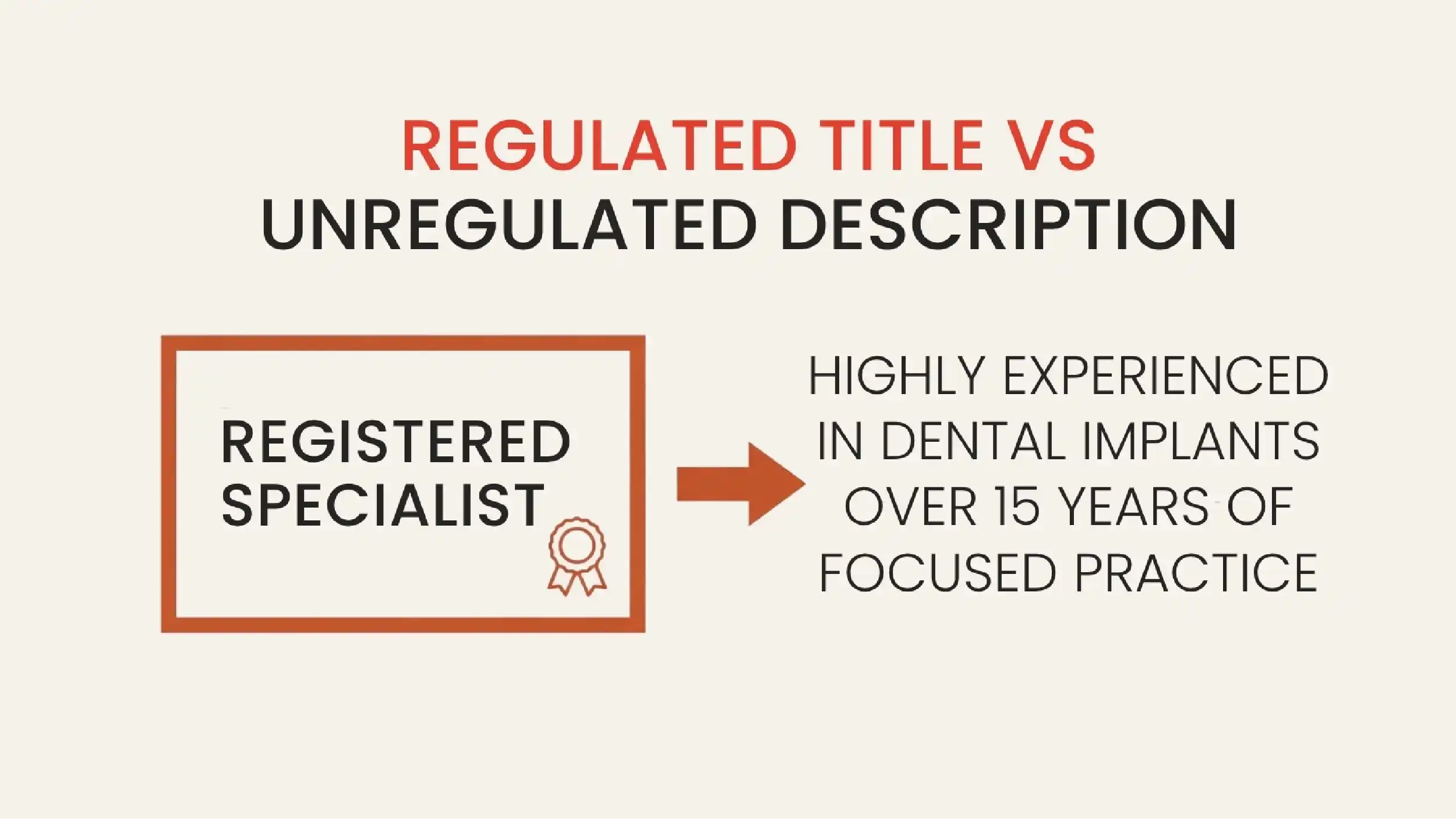
Specialist is a regulated title in dentistry in most jurisdictions, and a general dentist who performs a treatment frequently is not a specialist in it however much experience they have. Used accurately, it is one reason a practice can be named when a patient searches for a particular specialty, and used loosely it is a claim that fails the first check. Assistants distinguish the roles by name, orthodontist, oral surgeon, endodontist, periodontist, which means patients arrive with the vocabulary and the ability to check it against a register.
The line, and why it is easy to cross accidentally
The claim that breaches is usually not a false one, it is a loose one. Saying a practice specialises in implants when no clinician holds specialist registration reads to a regulator as a title claim and to a patient as a qualification. Neither is intended and both follow from a word chosen for convenience.
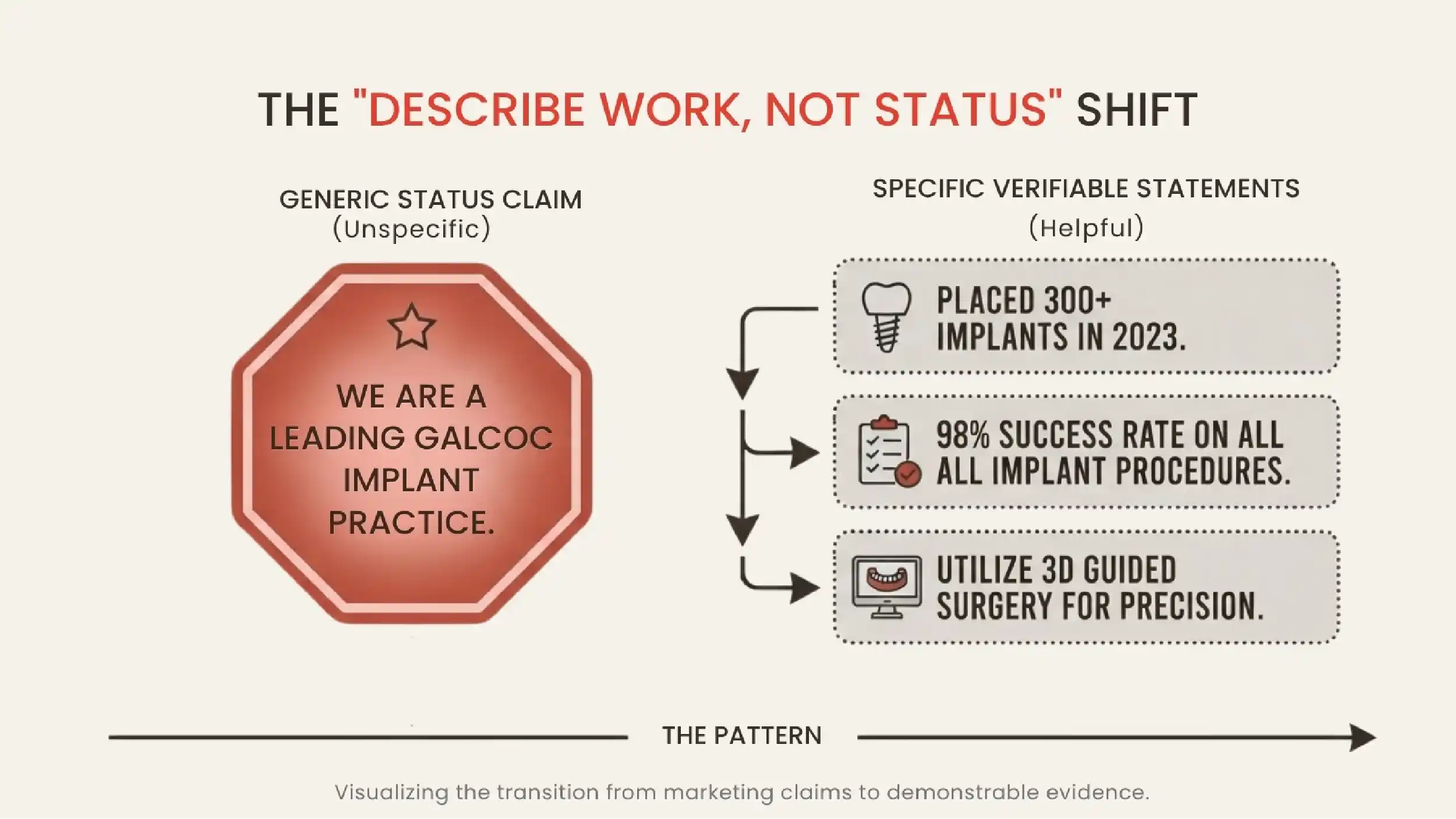
The safe construction describes the work rather than claiming the status. Saying a clinician has placed a stated number of implants over a stated period, or has completed a named programme, is checkable, more specific and carries no regulatory exposure.
What to publish when a genuine specialist is involved
Name the specialty, the register, and the clinician. A specialist qualification is externally verifiable and it is one of the few credentials in dentistry that a patient can confirm in a minute, so it should be stated in a form that makes confirming it easy.
Where a specialist visits rather than being resident, say the arrangement. A patient told an orthodontist attends on Wednesdays understands the practice accurately, and that is more useful than an unqualified claim that orthodontics is offered.
The general dentist doing advanced work
Most complex dentistry is performed by general dentists with additional training, and that is legitimate and normal. What patients want is a way to weigh it, and the answer is the training and the volume rather than a title.
Naming the postgraduate programme, the mentor, the certification body and the number of cases gives a patient something to assess. It is also more persuasive than the word specialist would have been, because it is specific enough to be false and therefore reads as true.
Where practices get caught
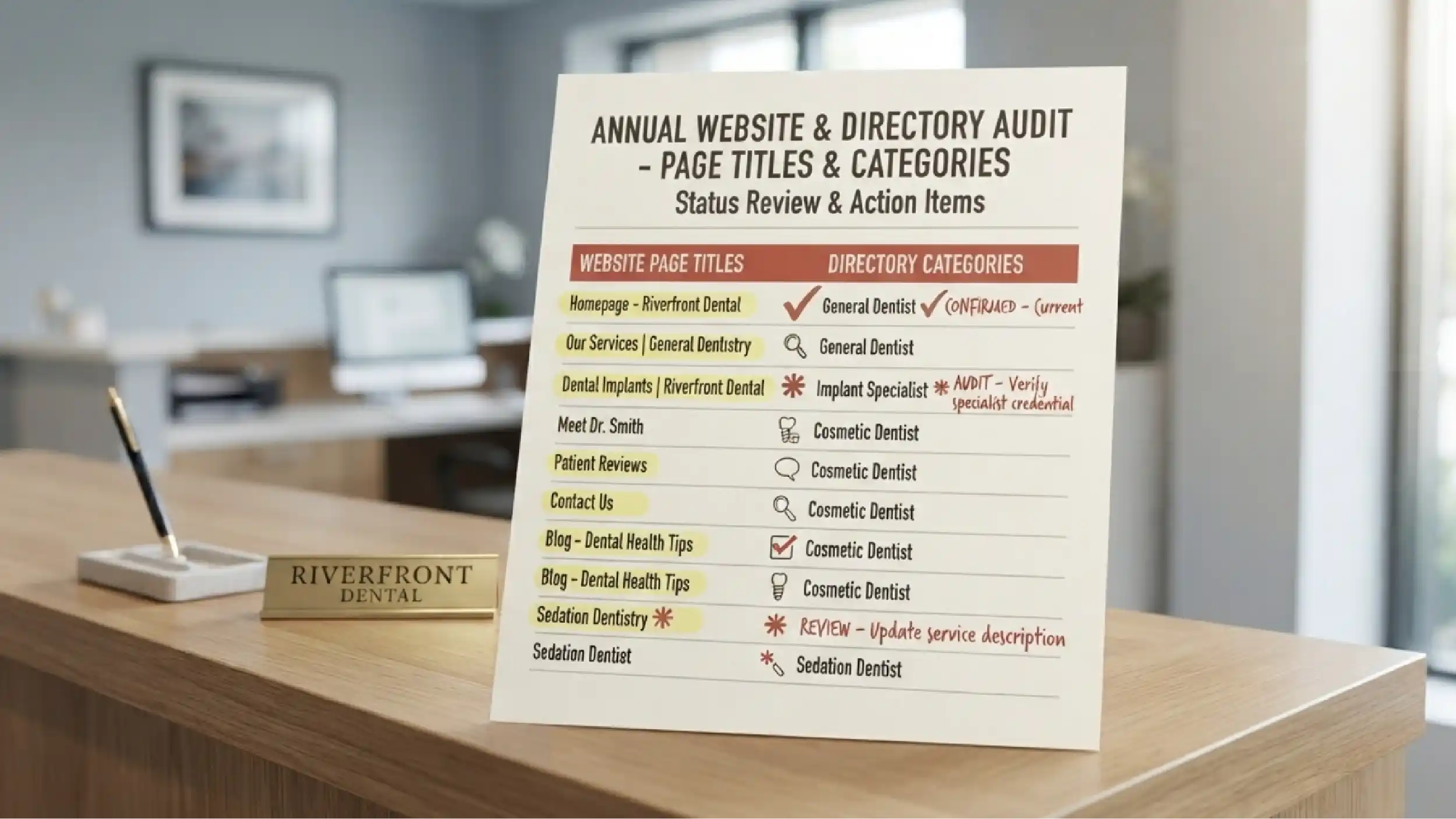
The compliance risk usually sits in a page title, a meta description or an advertisement rather than the body text, because those are written for search and shortened for space. A page titled implant specialist with body copy that carefully describes experience is still making the claim in the place most likely to be seen.
Audit the short surfaces first: titles, listing categories, directory profiles and the map listing category. Those are where the regulated word gets used casually and they are the versions a patient and a regulator both encounter before the page itself.
SEO Is My Love Language was founded by Jose Villalobos, who has spent his career on a single discipline: getting businesses found, cited, and recommended by AI search. He has been a member of Koray Tuğberk Gübür’s Holistic SEO Community since 2022, is a graduate of the Topical Authority Course, holds the Google AI Professional Certificate, and is a member of Kyle Roof’s IMG. That combination, topical authority strategy paired with rigorous on-page execution, is what our team brings to every practice we work with.
A regulated title is one of the few dental claims a patient can check independently, and it is one node in the dental map this page belongs to. It rests on the licence a title has to sit on, and the reader asking about it usually wants to know where a case goes when it needs a specialist.
Frequently asked questions
What does specialist mean in dentistry?
It is a regulated title in most jurisdictions, attached to a register. A general dentist who performs a treatment frequently is not a specialist in it however much experience they have, and patients arrive with the vocabulary because assistants name the roles directly.
How do practices cross the line accidentally?
With a loose word rather than a false claim. Saying a practice specialises in implants when no clinician holds specialist registration reads to a regulator as a title claim and to a patient as a qualification, and both follow from a word chosen for convenience.
What should a general dentist doing advanced work publish?
The training and the volume rather than a title: the postgraduate programme, the mentor, the certification body and the number of cases. That is specific enough to be false and therefore reads as true, which the word specialist would not.
How should a genuine specialist be presented?
By naming the specialty, the register and the clinician, in a form that makes confirming it easy, since it is one of the few dental credentials a patient can verify in a minute. Where a specialist visits rather than being resident, say the arrangement and the days.
Where do practices most often get caught?
In page titles, meta descriptions, advertisements, directory profiles and the map listing category, because those are written for search and shortened for space. Those short surfaces are what a patient and a regulator both encounter before the page itself.
See where your practice stands in AI answers
See where your practice stands in AI answers today and what it would take to own the answer. Book a strategy call and we will show you.