Listing What the Practice Actually Does
A services list tells a patient whether their problem is one this practice handles, and most read as an undifferentiated menu covering everything from a hygiene visit to full mouth reconstruction. Written as answers rather than a menu, it gives a practice a chance of being named when someone searches for one treatment in particular. Assistants advising patients to check the services offered name specific things, cleanings, emergency care, orthodontics, implants, which means the reader arrives with a particular item to find rather than a list to browse.
Group by what the patient came for
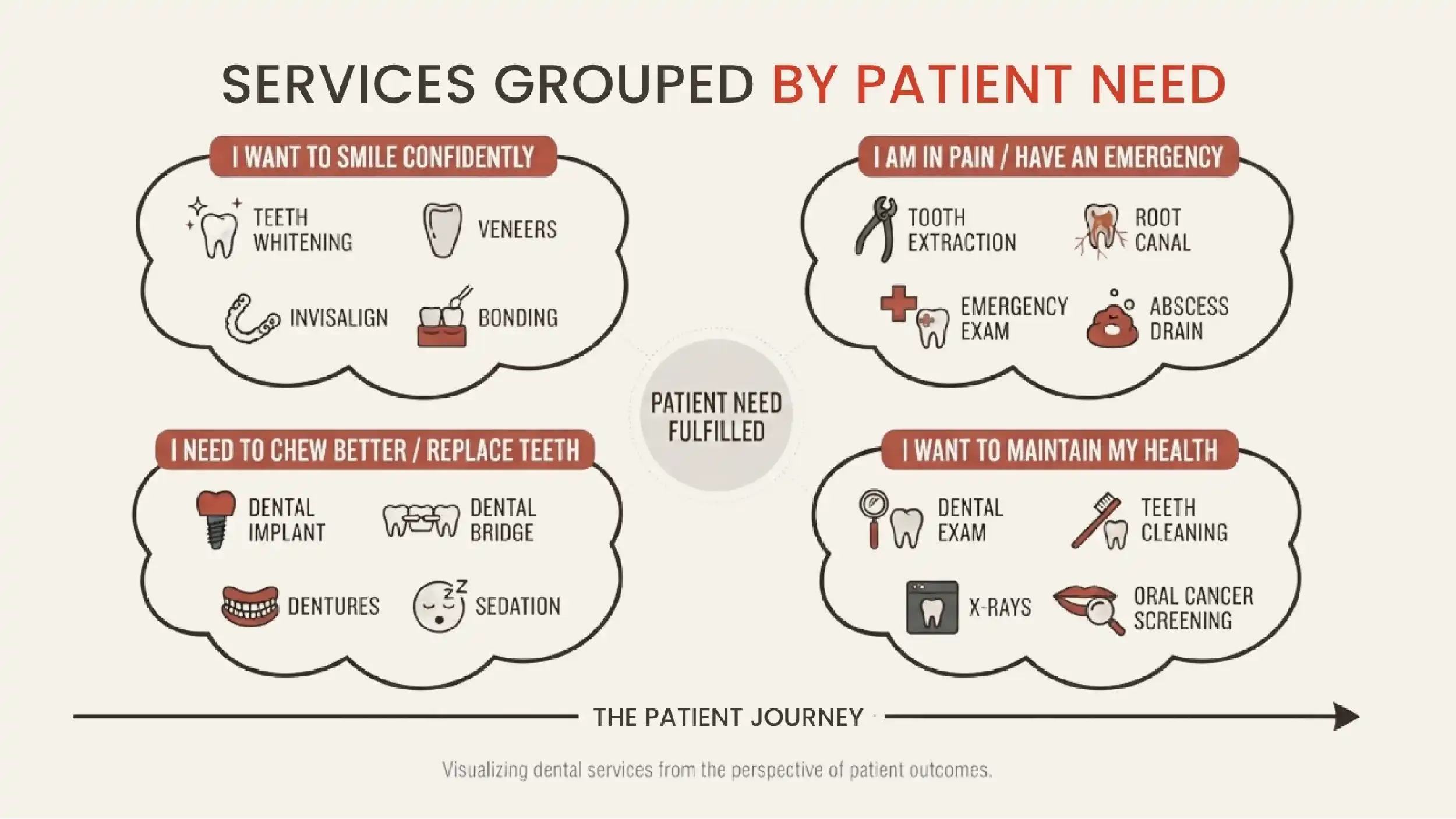
Patients arrive with a situation rather than a procedure name. Someone with a broken tooth does not search for restorative dentistry, and someone whose child needs a check is not looking for paediatric preventive care. Grouping by need, routine care, something hurts, something looks wrong, replacing a missing tooth, matches how the reader thinks.
The clinical taxonomy still belongs on the page, underneath. It reassures the patient who knows the term and it is what a referring clinician looks for, but it is not the top level organising principle.
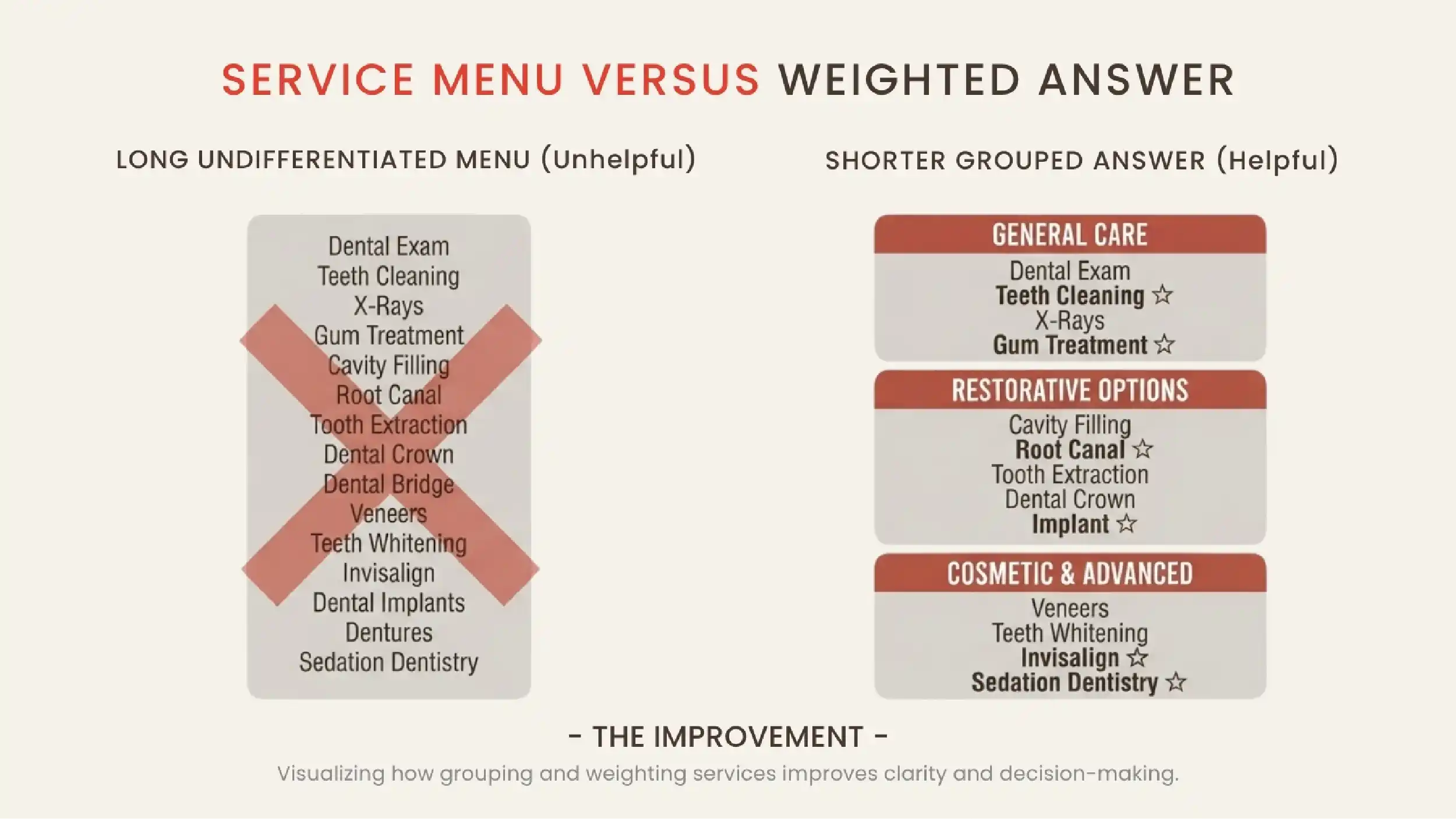
Say what the practice does most
A list gives every item equal weight, which is never true. A practice doing a great deal of implant work and occasional orthodontics is telling a reader nothing useful by listing both plainly, and the reader has no way to distinguish the core from the occasional.
Saying what the practice does most is more useful than listing what it can do at all. It is also the honest version, and it makes the rest of the page credible, because a patient who reads a differentiated list believes the differentiation.
Depth beats a longer list
A page naming twenty procedures with a sentence each answers nothing. One that covers the six the practice actually does regularly, with what the visit involves, how long it takes and what it costs, answers the questions that decide a booking.
The test is whether the page could have been written by someone who does not perform the procedure. If it could, it is describing a category rather than a capability, and the reader will find the same paragraph on four competing sites.
The items patients look for by name
A short set gets searched by name and should be findable without hunting: emergency appointments, hygiene, children, implants, clear aligners, and whitening. Those are the terms people use, and a page burying them inside a clinical heading loses the patient who was looking for exactly that word.
Where the practice does not offer one of them, saying so is more useful than silence. A patient who wants aligners and finds nothing assumes the answer is no anyway, and a stated no with a referral route keeps the relationship for everything else.
SEO Is My Love Language was founded by Jose Villalobos, who has spent his career on a single discipline: getting businesses found, cited, and recommended by AI search. He has been a member of Koray Tuğberk Gübür’s Holistic SEO Community since 2022, is a graduate of the Topical Authority Course, holds the Google AI Professional Certificate, and is a member of Kyle Roof’s IMG. That combination, topical authority strategy paired with rigorous on-page execution, is what our team brings to every practice we work with.
A services list is the second page a patient opens and the first that disappoints them, and it exists to serve the marketing this services page has to serve. Two pages finish what it starts: the treatments that leave the building and the equipment behind the treatment list.
Frequently asked questions
How should a dental services page be organised?
By what the patient came for rather than by clinical category. Patients arrive with a situation: a broken tooth, a child needing a check, something that looks wrong. The clinical taxonomy still belongs on the page, underneath, where it reassures the patient who knows the term.
Should every service be listed with equal weight?
No, because that is never true. A practice doing a great deal of implant work and occasional orthodontics tells a reader nothing by listing both plainly. Saying what the practice does most is more useful than listing what it can do at all, and it makes the rest of the page credible.
Is a longer services list better?
No. Twenty procedures with a sentence each answers nothing. Six the practice does regularly, with what the visit involves, how long it takes and what it costs, answers the questions that decide a booking.
How can a practice tell whether a service page is thin?
Ask whether it could have been written by someone who does not perform the procedure. If it could, it is describing a category rather than a capability, and the same paragraph will be on four competing sites.
What should a practice do about services it does not offer?
Say so, with a referral route. A patient who wants clear aligners and finds nothing assumes the answer is no anyway, and a stated no keeps the relationship for everything else.
See where your practice stands in AI answers
See where your practice stands in AI answers today and what it would take to own the answer. Book a strategy call and we will show you.